A Family History Month update – databases, directories, maps & more!
A few years ago I posted about some of my family history related resources, but things have changed a bit since then so I thought it was time for a Family History Month update.
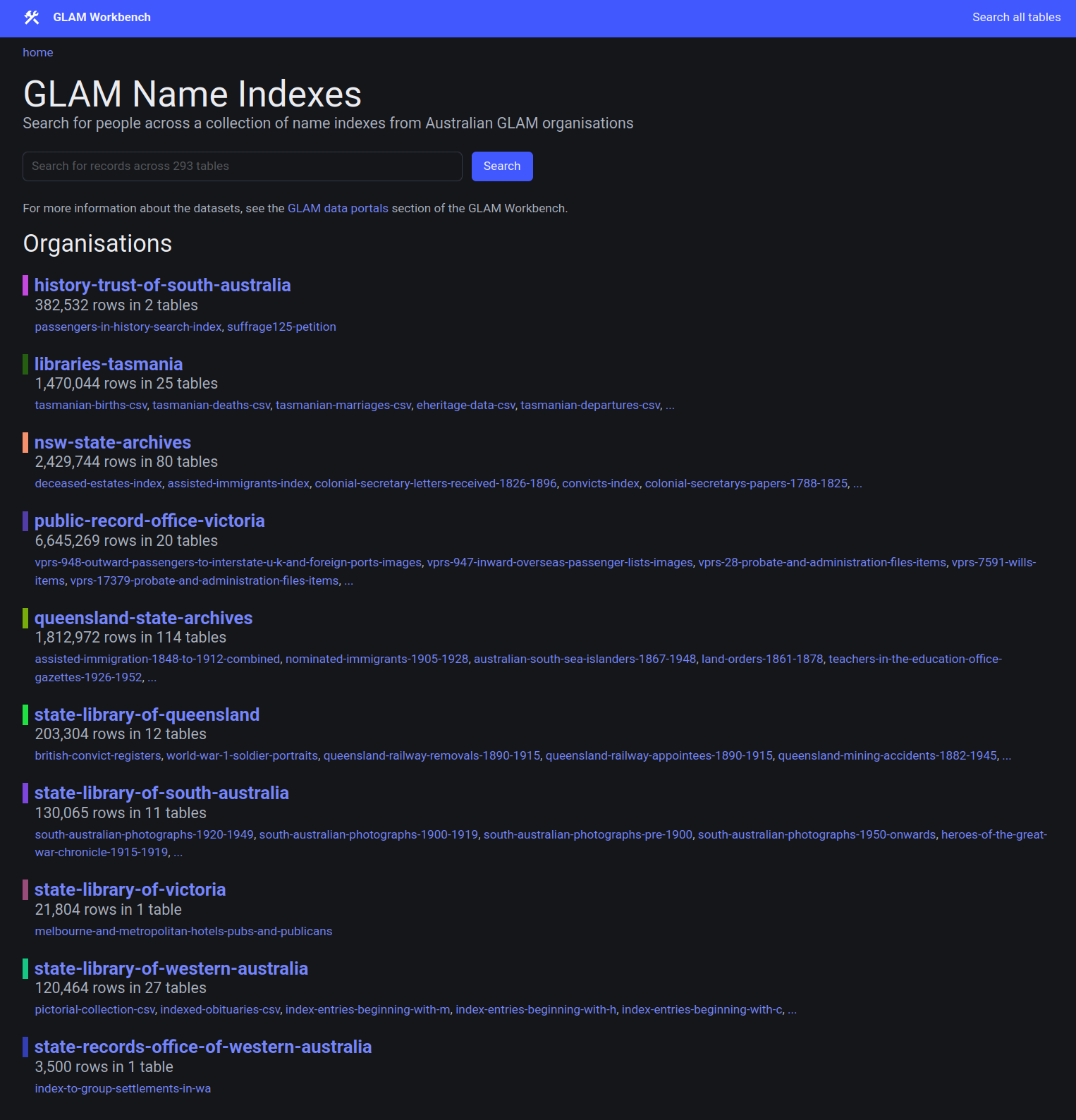
GLAM Name Index Search
The GLAM Name Index Search brings 293 datasets from 10 Australian GLAM organisations together into a single search interface. All these datasets index collections by people’s names, so with one search you can find information about individuals across a broad range of records, locations, and periods.
I update the index regularly, adding new datasets as they become available. In April last year, I added more than 6 million rows of data from the Public Record Office of Victoria using their API. That brings the total number of records to close to 13 million!
Directories from NSW, Tasmania, and Victoria
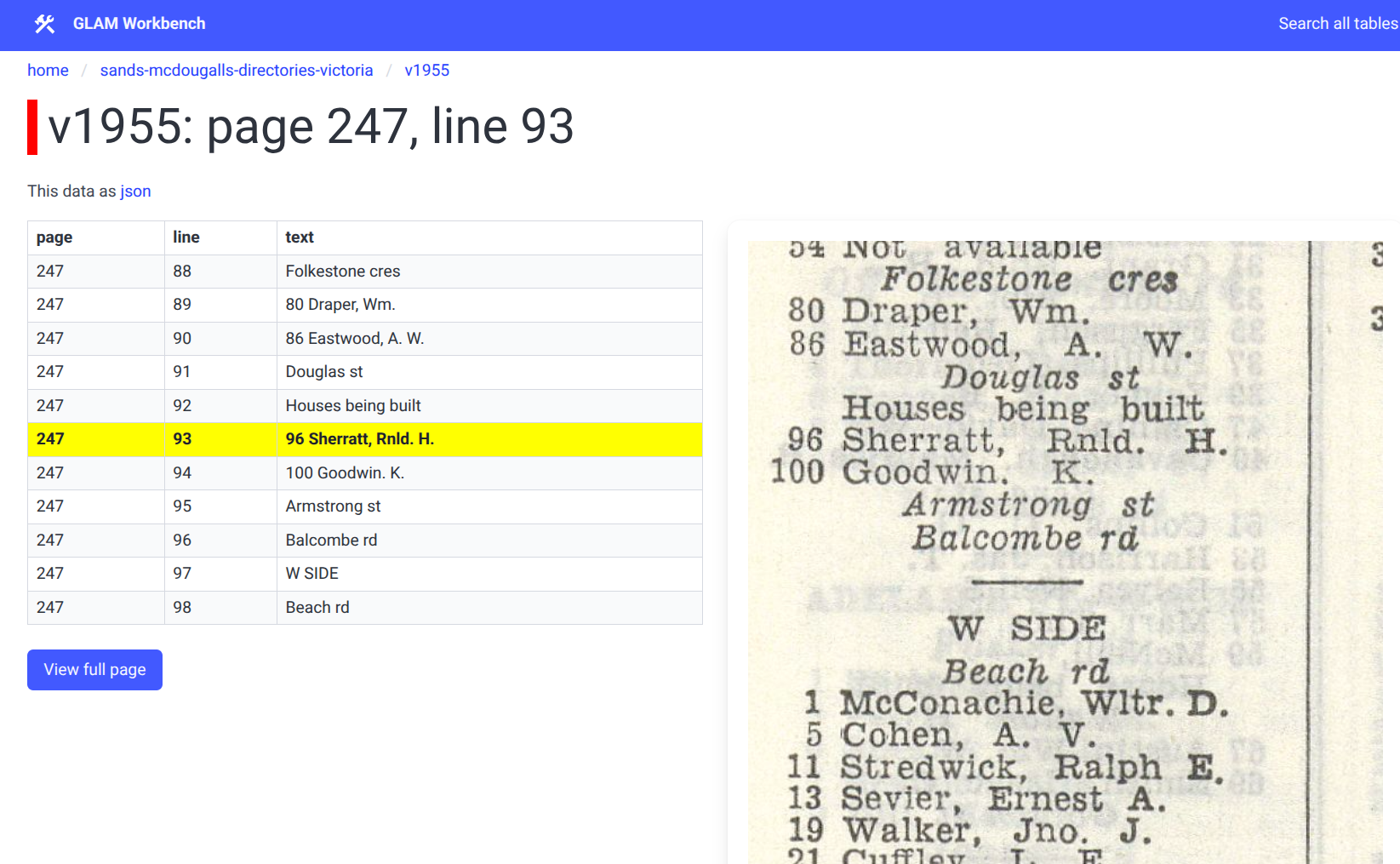
A lot of old directories, full of people’s names and addresses, have been digitised by our state libraries, but often they’re difficult to search. I’ve processed 176 volumes from NSW, Tasmania, and Victoria to create new search interfaces that let you search for individual entries.
The most recent addition to this collection was 24 volumes of the Sands & McDougall’s directory from the State Library of Victoria.
Now you can search:
- NSW Post Office Directories (54 volumes from 1886 to 1950)
- Sydney Telephone Directories (44 volumes from 1926 to 1954)
- Tasmanian Post Office Directories (54 volumes from 1890 to 1948)
- Sands & McDougall’s Directories, Victoria (24 volumes from 1860 to 1974)
The NSW Post Office Directories display page images from Trove. Trove has recently introduced some anti-bot measures which might stop these images being displayed. There’s an easy workaround though – just click on the ‘Open page in Trove’ button to show Trove you’re a human, then go back to your search and reload the page. You’ll only need to do this once, as the bot detector sets a cookie that can be used in any subsequent requests.
You can also search the Sands & McDougall’s directories using my experimental my place app (see below).
GLAM databases have a new home
Earlier this year I set up a new server, with added bot defences, to host most of my big GLAM databases including the GLAM Name Index Search and the directories. If you’ve saved any bookmarks to these resources please update them. The old addresses will continue to work for a while, but eventually I’ll need to turn off the redirects.
You might also notice an odd-looking screen pop up when you try to access the site. This is just the bot defences at work. It’ll run a little test to try and make sure you’re a human then send you on your way – no clicking on tiny pictures of bicycles is necessary!
Tung Wah Newspaper Index
The Tung Wah Newspaper Index is an English-language index to two Chinese-language newspapers – the Tung Wah News (1898–1902) and the Tung Wah Times (1902–1936), both published in Sydney. The index was compiled back in 2001 at Latrobe University. I’ve put it in a new database with links to digitised pages in Trove wherever I could identify them.
Finding newspapers by place
Way back in 2014, I created a map interface to help you find where Trove’s newspapers were published and distributed. It’s still working, though it’s been moved to my wraggelabs.com site, so please update your bookmarks. I haven’t added to the list of newspapers for a few years, and updating is difficult now as I don’t have access to the Trove API, but I’m going to try and update it manually. Stay tuned.
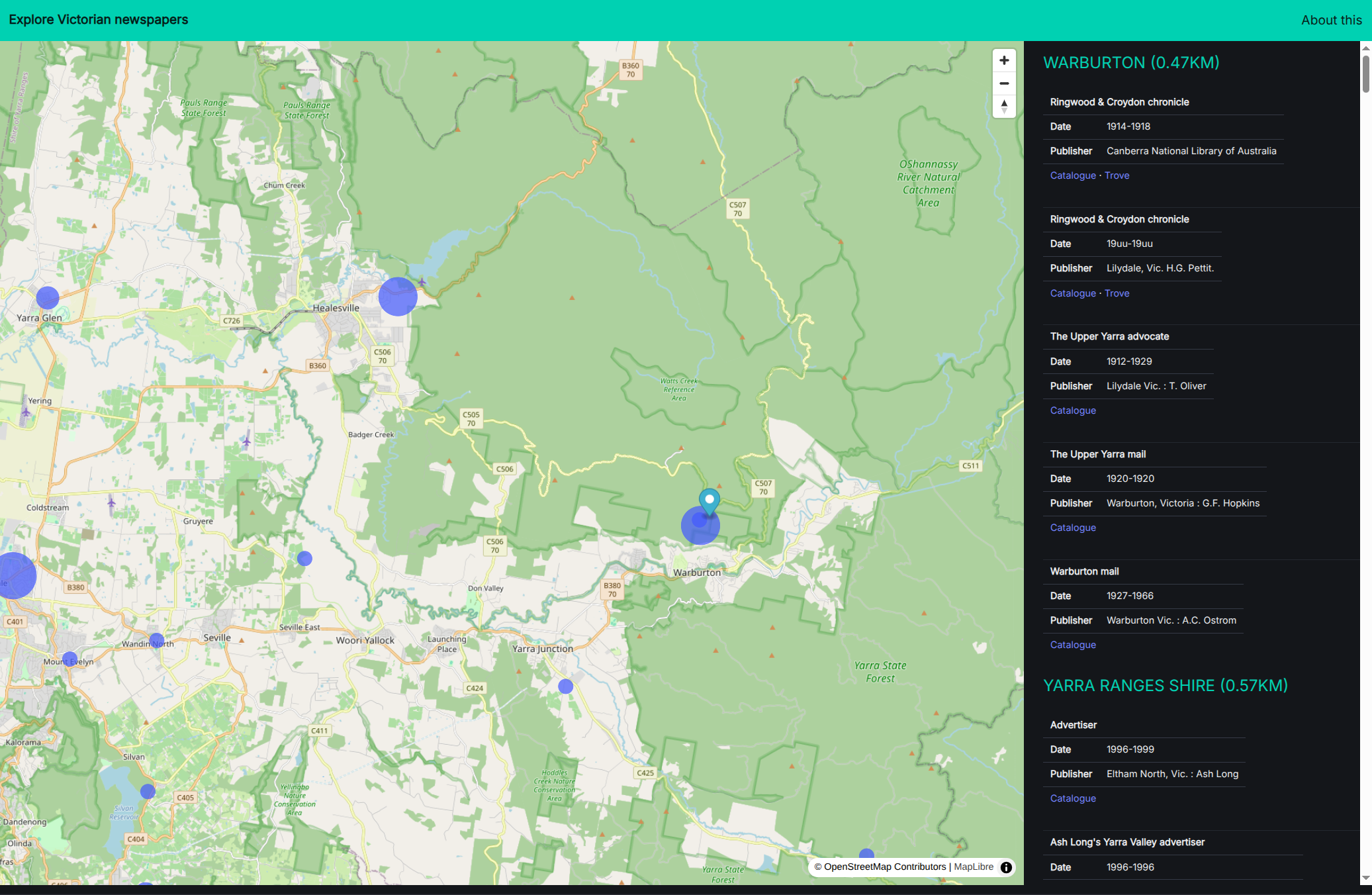
In the meantime, I’ve created a brand new map interface to Victorian newspapers, both digitised and undigitised. Just click on a map of Victoria to find places nearby that have associated newspapers. The list of newspapers links back to the SLV catalogue and Trove if they’ve been digitised. It’s a good reminder that a lot of small, local newspapers still haven’t been fully digitised.
You can also search for Victorian newspapers using my experimental my place app (see below).
Victorian place-based collections
Late last year, I had a fun time playing with place-based collections at the State Library of Victoria. My time as Creative Technologist-in-residence resulted in a number of new apps, indexes and interfaces, including the Sands & Mac search interface and the Newspapers Explorer. Many of these will be useful if you’re trying to find out more about the places people lived. You can browse a complete list of my experiments and blog posts, but here’s a few more highlights.
my place
The my place app is a good place to start as it pulls in data from all the different collections that I was working with. It was inspired by the number of people who come to the SLV wanting to find out about their house, or their street, or their town. You just type in an address and my place shows you maps, photos, newspapers, and even extracts from the Sands & MacDougall directories. The search results are bookmarkable, so save and share your discoveries.
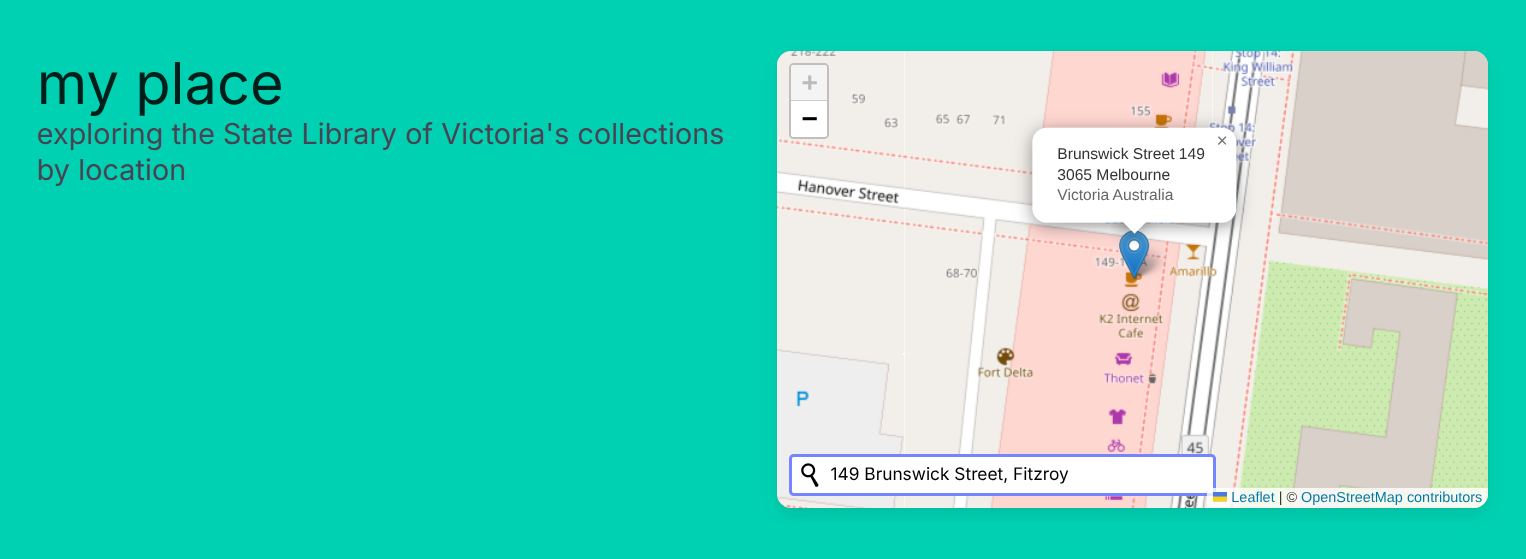
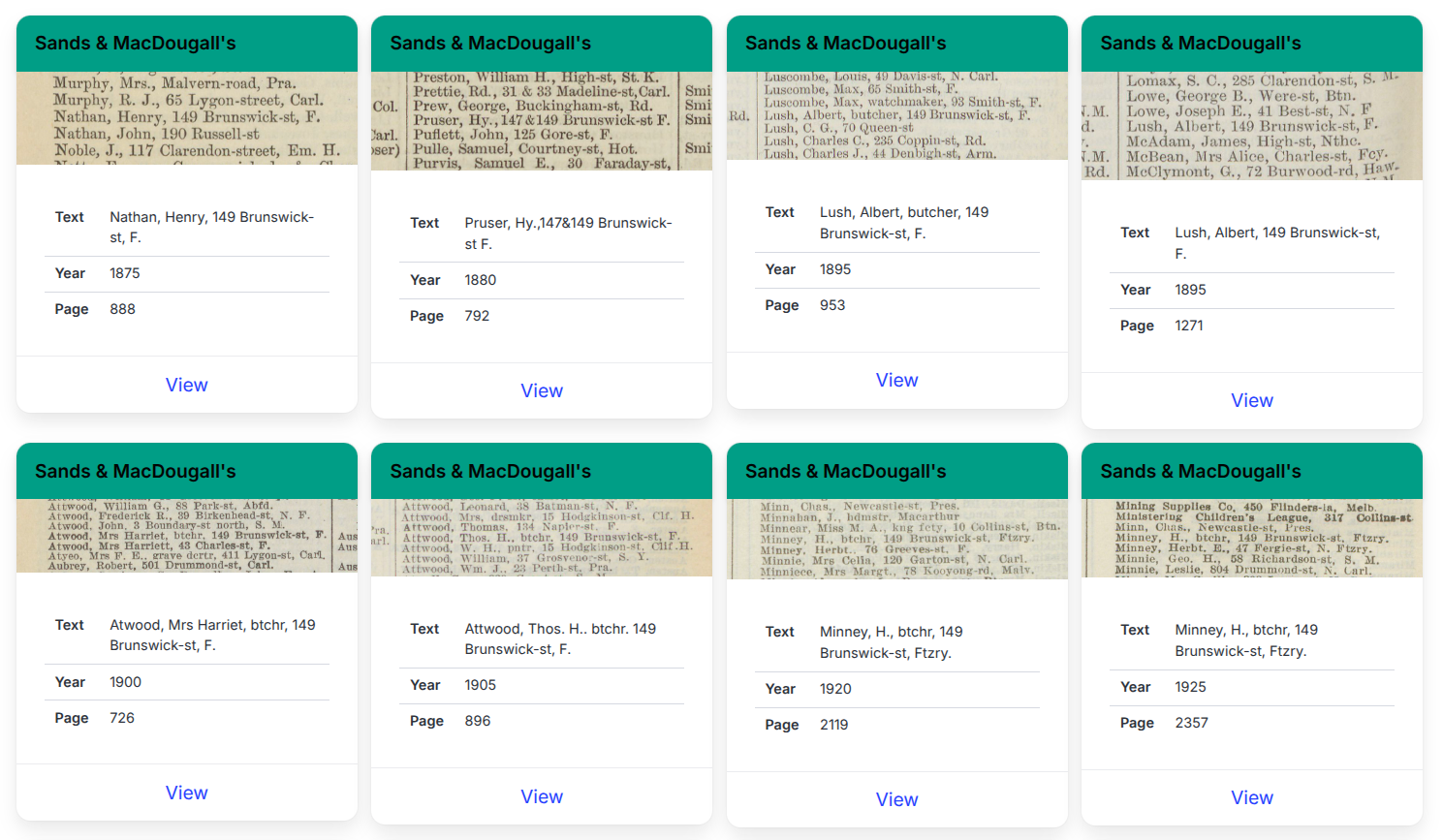
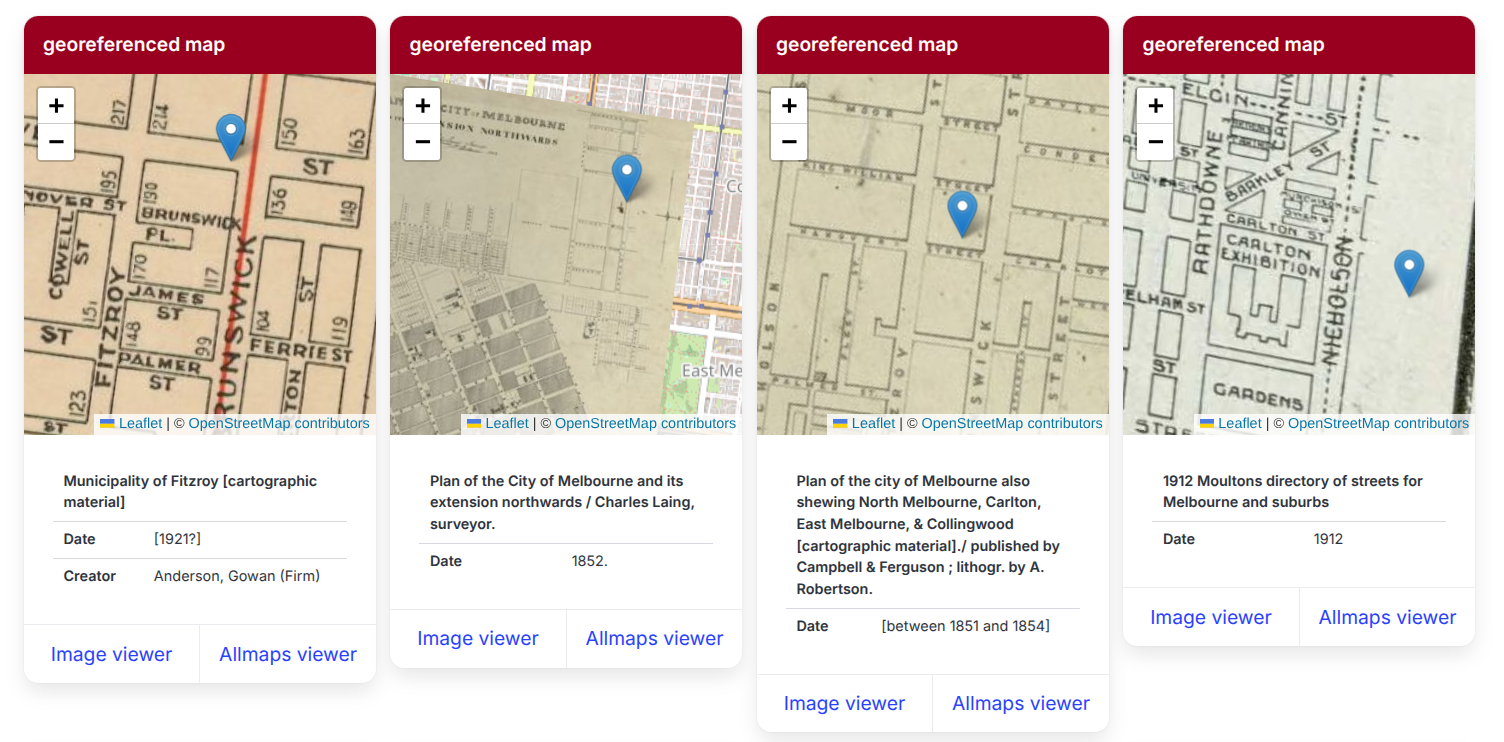
You can find out more about my place and the collections it uses in this post.
Committee for Urban Action photos
In the 1970s, the Committee for Urban Action photographed streetscapes across urban and regional Victoria. Over 20,000 of these images have now been digitised. I created an interface that lets you explore these photographs street by street. Just click on a highlighted street to see photographs of buildings from the CUA collection.
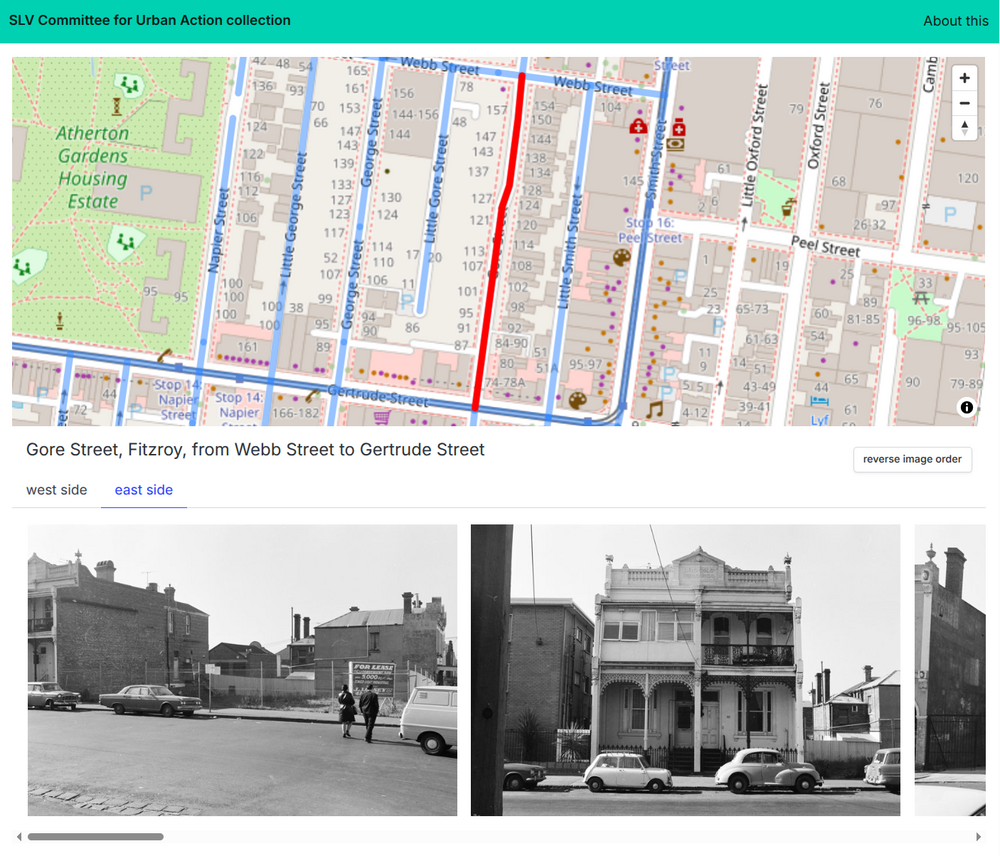
Georeferencing Victorian maps
I also did a bit of GLAM data plumbing to build a workflow that lets you georeference any of the SLV’s digitised maps. So far more than 1,400 maps have been georeferenced, enabling them to be found and displayed using modern digital mapping systems. You can explore the georeferenced maps using my place or this new interface which displays the georeferenced maps positioned on a modern basemap.
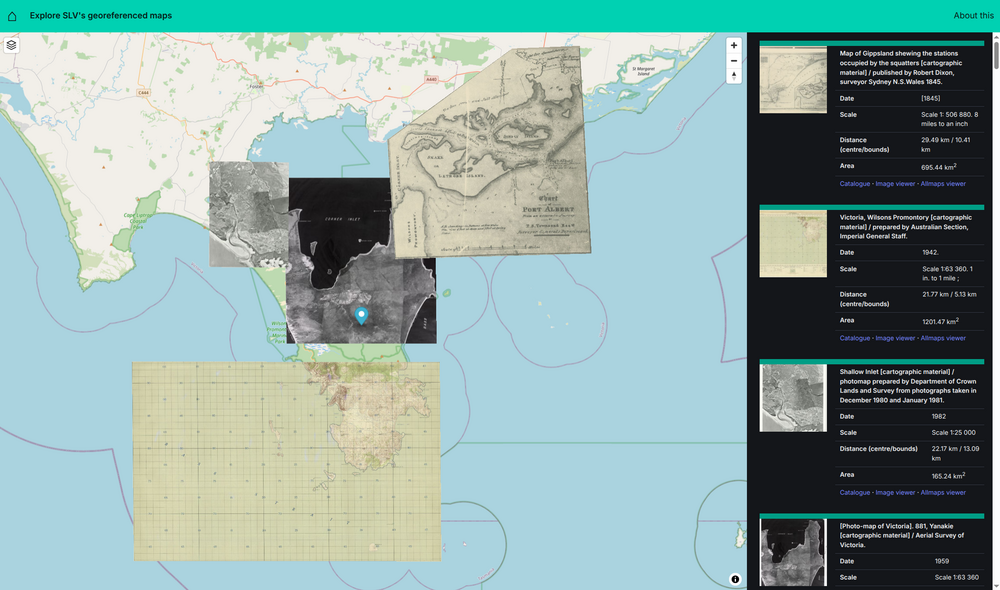
If you’d like to help georeference the SLV’s maps there’s detailed instructions here.
Saving Trove newspaper images
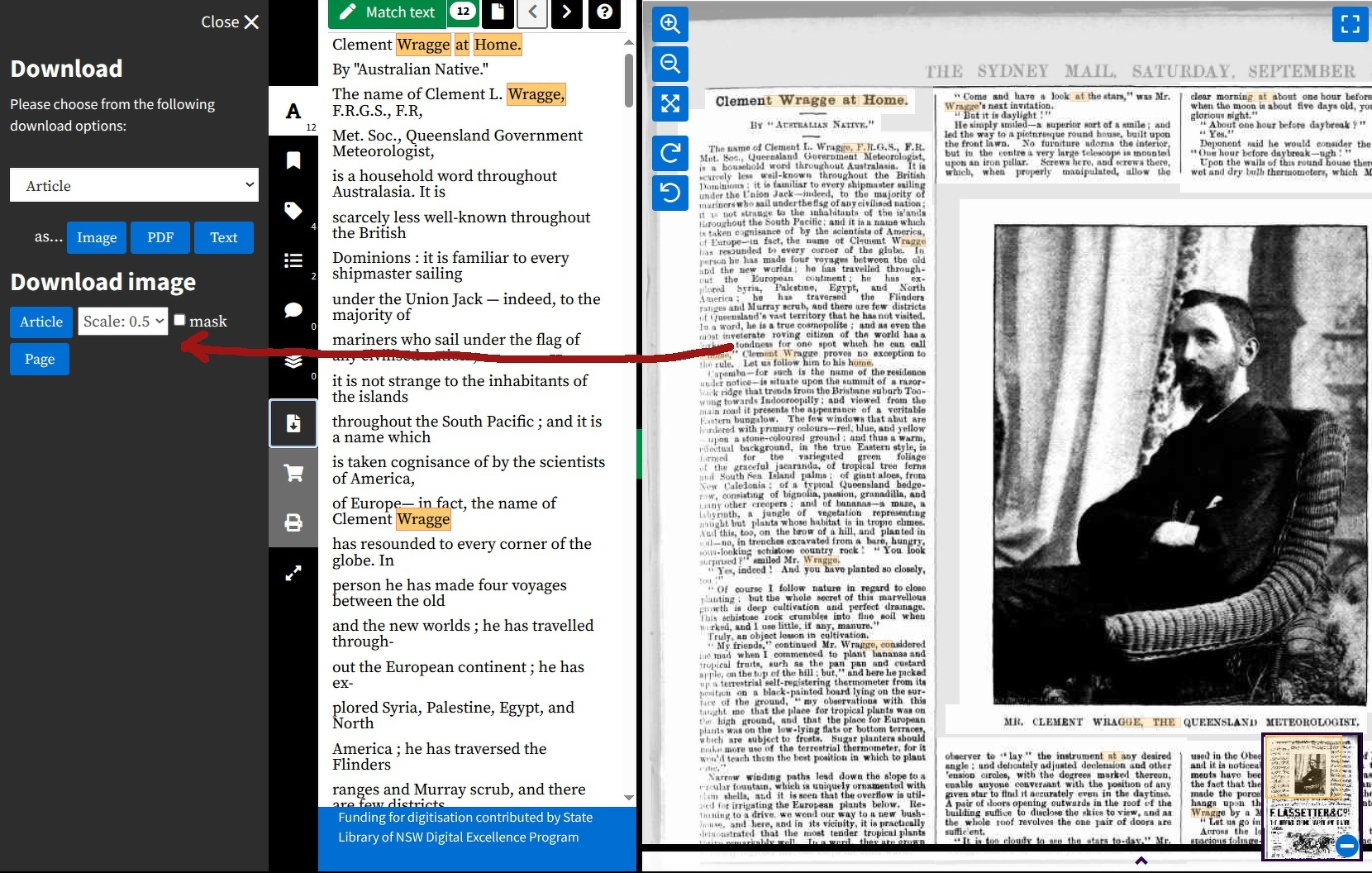
I’ve pretty much stopped work on Trove since they cancelled my API access, but saving digitised newspaper articles as decent quality images is still such a pain that I’ve created a new userscript that adds some new download buttons to the Trove interface.
Don’t forget Zotero!
I’ve been continuing to create Zotero translators for Australian GLAM collections. These translators enable Zotero to capture not just citation details, but images and documents from digitised collections. Here, for example, are some details about the translator for Libraries Tasmania that makes it easy to capture digitised documents from their Names Index.
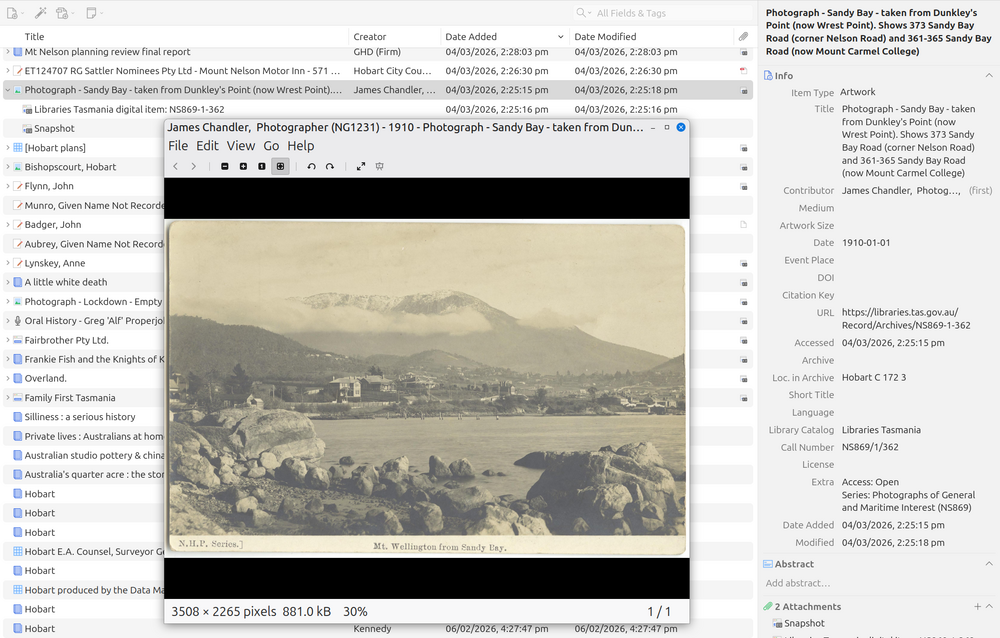
There are now custom translators for Libraries Tasmania, National Archives of Australia, Trove, National Gallery of Australia, State Records Office of WA, PROV, and Queensland State Archives.
Other useful resources
- the Trove Data Guide has lots of useful hints and tips for working with Trove
- the GLAM Workbench helps you work with data from a number of different GLAM collections
Get the latest news…
If you want to keep up to date with my work on GLAM collections, follow my blog feed. There’s also an option to subscribe to a compilation email that comes out every month.