Trove uses codes from the MARC Geographic Areas list to identify locations in metadata records. I couldn’t find any mappings of these codes to other sources of geospatial information, so I fired up OpenRefine and reconciled the geographic area names against Wikidata. Once I’d linked as many as possible, I copied additional information from Wikidata, such as ISO country codes, GeoNames identifiers, and geographic coordinates.
I’ve saved the resulting dataset in two formats – as a flattened CSV file (handy for loading as a dataframe), and as a JSON file that uses the geographic area codes as keys (handy for looking up values).
In 2023 the National Archives of Australia digitised 416,602 files (down from 575,597 in 2022). This chart shows the number of files digitised per day in 2023.
These files were drawn from 1,423 different series, but the vast bulk (81%) were from 4 series of World War Two service records. (This media release includes some details about the funding of the WW2 digitisation.)
Here’s the top twenty series by number of items digitised in 2023.
I’ve been capturing weekly snapshots of the Trove newspaper corpus for the last couple of years. You can see the latest results in the Trove Newspaper Data Dashboard. Using this data I’ve compiled a quick summary of changes over the last year.
7,518,764 digitised newspaper articles were added to Trove in 2023. The total number of articles increased from 236,530,127 to 244,048,891. The chart below shows how the number of articles varied across the year.
I’m continuing to slog away at the Trove Data Guide (part of the ARDC’s HASS Community Data Lab) – dumping everything I know about Trove into a format that I hope will be useful for researchers.
I’ve just finished a first pass through the section on accessing data from newspapers and gazettes, and it’s online if you want to have a look. There’s still lots of things to add, update, and reorganise, but getting the basic content of the section defined is a bit of a milestone, so I’ll allow myself a little moment of celebration.
Version 3 of the Trove API is out, and version 2 is scheduled to be decommissioned in early 2023 – that means I have a lot of code to update! First cab of the rank is the Trove Newspaper & Gazette Harvester with version 0.7.1 now available.
The Harvester is a Python package that can be used as either a library or a command-line tool. It’s been around in some form for more than 10 years.
There are a number of different ways to run the Jupyter notebooks in the GLAM Workbench depending on your needs and technical skills. But the easiest and quickest has always been the public, international Binder service, based in Europe. One click in the GLAM Workbench and Binder prepares a customised computing environment and loads up the Jupyter notebooks ready for you to explore. Unfortunately, the public Binder service has been having some capacity issues in the last few months, and sometimes repositories fail to run.
I’ve just updated the Trove Query Parser to work with version 3 of the Trove API. You just give it the url of a search in Trove’s newspapers, and it translates the search into a set of parameters that the API will understand. So this:
parse_query("https://trove.nla.gov.au/search/category/newspapers?keyword=wragge&l-artType=newspapers&l-state=Queensland&l-category=Article&l-illustrationType=Cartoon", 3)
Produces this:
{'q': 'wragge', 'l-artType': 'newspapers', 'l-state': ['Queensland'], 'l-category': ['Article'], 'l-illustrated': 'true', 'l-illustrationType': ['Cartoon'], 'category': 'newspaper'}
You can then feed the parameters to the Trove API with your API key and you’ll get data back.
It’s Family History Month, so I thought a brief post was in order describing some of the family history related resources in the GLAM Workbench.
GLAM Name Index Search This is the biggie (in more ways than one). I’ve brought 263 datasets from 10 Australian GLAM organisations together into a single search interface. All these datasets index collections by people’s names, so with one search you can find information about individuals across a broad range of records, locations, and periods.
Way back in 2012, I used the brand new Trove API to download the details of 4 million articles published on the front pages of newspapers. I did it for two reasons: first, I wanted to see how the content of front pages changed over time; and second, I wanted to show that large-scale data wrangling was entirely possible using nothing more than a laptop and a home broadband connection. I described my adventures in this blog post, but if you look at it now you’ll see lots of sad, empty boxes where live charts used to be.
The Trove API Console provides examples of the Trove API in action that you can run, edit, and share. It’s been online for 9 years now, and I’ve just updated it to use version 3 of the Trove API by default. I’ve also added a new ‘Share’ button that makes it easier to share and embed examples.
If you click on the ‘Share’ button, a box will pop up.
If you add a comment, this will appear above the example query when users follow the shared link.
The NSW State Archives (now part of Museums of History NSW) publishes a series of useful indexes to its collections. The indexes include basic data transcribed from the records, such as names, dates, and places, providing fine-grained access to the collections. But when they’re explored as data, the indexes also suggest new ways of analysing, visualising, and linking sets of records. (For some of the possibilities and challenges of using this sort of data see Missing Links: Data Stories from the Archive of British Settler Colonial Citizenship).
There have been quite a few GLAM Workbench updates over the last month, here’s some notes. (See February’s update for more recent changes…)
General developments After many months of work, all thirteen Trove repositories within the GLAM Workbench have been updated to include standard configurations, integrations, and basic tests. This will make ongoing development and maintenance much easier. Docker images of every repository are now built automatically whenever the code changes.
Once again I’ve gotten a bit behind in noting GLAM Workbench updates, so here’s a quick catch up on some Trove-related changes from the last couple of months.
Trove API introduction The section that introduces the Trove API (or APIs!) hasn’t had much love over recent years. I’m hoping to add some more content in the coming months, but for now I just did a bit of maintenance – updating Python packages and config files, including tests, and setting up automated builds of Docker containers.
October and November brought a flurry of presentations from which I’m still recovering. Here’s a few details and links.
Library of Congress Data Jam In October, the Computing Cultural Heritage in the Cloud project at the Library of Congress organised a Data Jam. I was invited to spend a couple of weeks playing around with one of their datasets and to report on the results. I ended up trying to find references to countries in a collection of 90,000 OCRd books.
The Trove Newspaper Harvester has been around in different forms for more than a decade. It helps you download all the articles in a Trove newspaper search, opening up new possibilities for large-scale analysis. You can use it as a command-line tool by installing a Python package, or through the Trove Newspaper Harvester section of the GLAM Workbench.
I’ve just overhauled development of the Python package. The new trove-newspaper-harvester replaces the old troveharvester repository.
A few weeks ago I created a new search interface to the NSW Post Office Directories from 1886 to 1950. Since then, I’ve used the same process on the Sydney Telephone Directories from 1926 to 1954. Both of these publications had been digitised by the State Library of NSW and made available through Trove. To build the new interfaces I downloaded the text from Trove, indexed it by line, and linked it back to the online page images.
I’ve updated the GLAM Workbench’s harvest of OCRd text from Trove’s digitised periodicals. This is a completely fresh harvest, so should include any corrections made in recent months. It includes:
1,430 periodicals OCRd text from 41,645 issues About 9gb of text The easiest way to explore the harvest is probably this human-readable list. The list of periodicals with OCRd text is also available as a CSV. You can find more details in the Trove journals section of the GLAM Workbench, and download the complete corpus from CloudStor.
I’ve updated my map displaying places where Trove digitised newspapers were published or distributed. You can view all the places on single map – zoom in for more markers, and click on a marker for title details and a link back to Trove.
If you want to find newspapers from a particular area, just click on a location using this map to view the 10 closest titles.
You can view or download the dataset used to construct the map.
As part of my work on the Everyday Heritage project I’m looking at how we can make better use of digitised collections to explore the everyday experiences woven around places such as Parramatta Road in Sydney. For example, the NSW Postal Directories from 1886 to 1908 and 1909 to 1950 have been digitised by the State Library of NSW and made available through Trove. The directories list residences and businesses by name and street location.
Interested in Victorian shipwrecks? Kim Doyle and Mitchell Harrop have added a new notebook to the Heritage Council of Victoria section of the GLAM Workbench exploring shipwrecks in the Victorian Heritage Database: glam-workbench.net/heritage-…
You might have noticed some changes to the web archives section of the GLAM Workbench.
I’m very excited to announce that the British Library is now sponsoring the web archives section! Many thanks to the British Library and the UK Web Archive for their support – it really makes a difference.
The web archives section was developed in 2020 with the support of the International Internet Preservation Consortium’s Discretionary Funding Programme, in collaboration with the British Library, the National Library of Australia, and the National Library of New Zealand.
There’s lots of GLAM data out there if you know where to look! For the past few years I’ve been harvesting a list of datasets published by Australian galleries, libraries, archives, and museums through open government data portals. I’ve just updated the harvest and there’s now 463 datasets containing 1,192 files. There’s a human-readable version of the list that you can browse. If you just want the data you can download it as a CSV.
I’ve made a small change to the Zotero translator for the National Library of Australia’s catalogue. Now, if there’s a link to a digitised version of the work in Trove, that link will be saved in Zotero’s url field. This makes it quicker and easier to view digitised items – just click on the ‘URL’ label in Zotero to open the link.
It’s also handy if you’re viewing a digitised work in Trove and want to capture the metadata about it.
The metadata for digitised books and journals in Trove can seem a bit sparse, but there’s quite a lot of useful metadata embedded within Trove’s web pages that isn’t displayed to users or made available through the Trove API. This notebook in the GLAM Workbench shows you how you can access it. To make it even easier, I’ve added a new endpoint to my Trove Proxy that returns the metadata in JSON format.
I was looking at my Trove Newspapers Data Dashboard again last night trying to figure out why the number of newspaper articles from NSW seemed to have dropped by more than 700,000 since my harvesting began. It took me a while to figure out, but it seems that the search index was rebuilt on 31 May, and that caused some major shifts in the distribution of articles by state, as reported by the main result API.
There’s been lots of small updates to the GLAM Workbench over the last couple of months and I’ve fallen behind in sharing details. So here’s an omnibus list of everything I can remember…
Data Weekly harvests of basic Trove newspaper data continue, there’s now about three months worth. You can view a summary of the harvested data through the brand new Trove Newspaper Data Dashboard. The Dashboard is generated from a Jupyter notebook and is updated whenever there’s a new data harvest.
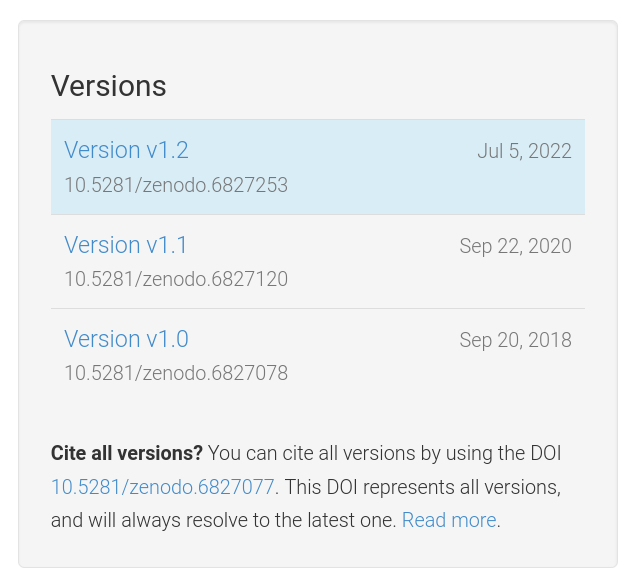
Updated dataset! Harvests of Trove list metadata from 2018, 2020, and 2022 are now available on Zenodo: doi.org/10.5281/z… Another addition to the growing collection of historical Trove data. #GLAMWorkbench
Coz I love making work for myself, I’ve started pulling datasets out of #GLAMWorkbench code repos & creating new data repos for them. This way they’ll have their own version histories in Zenodo. Here’s the first: github.com/GLAM-Work…